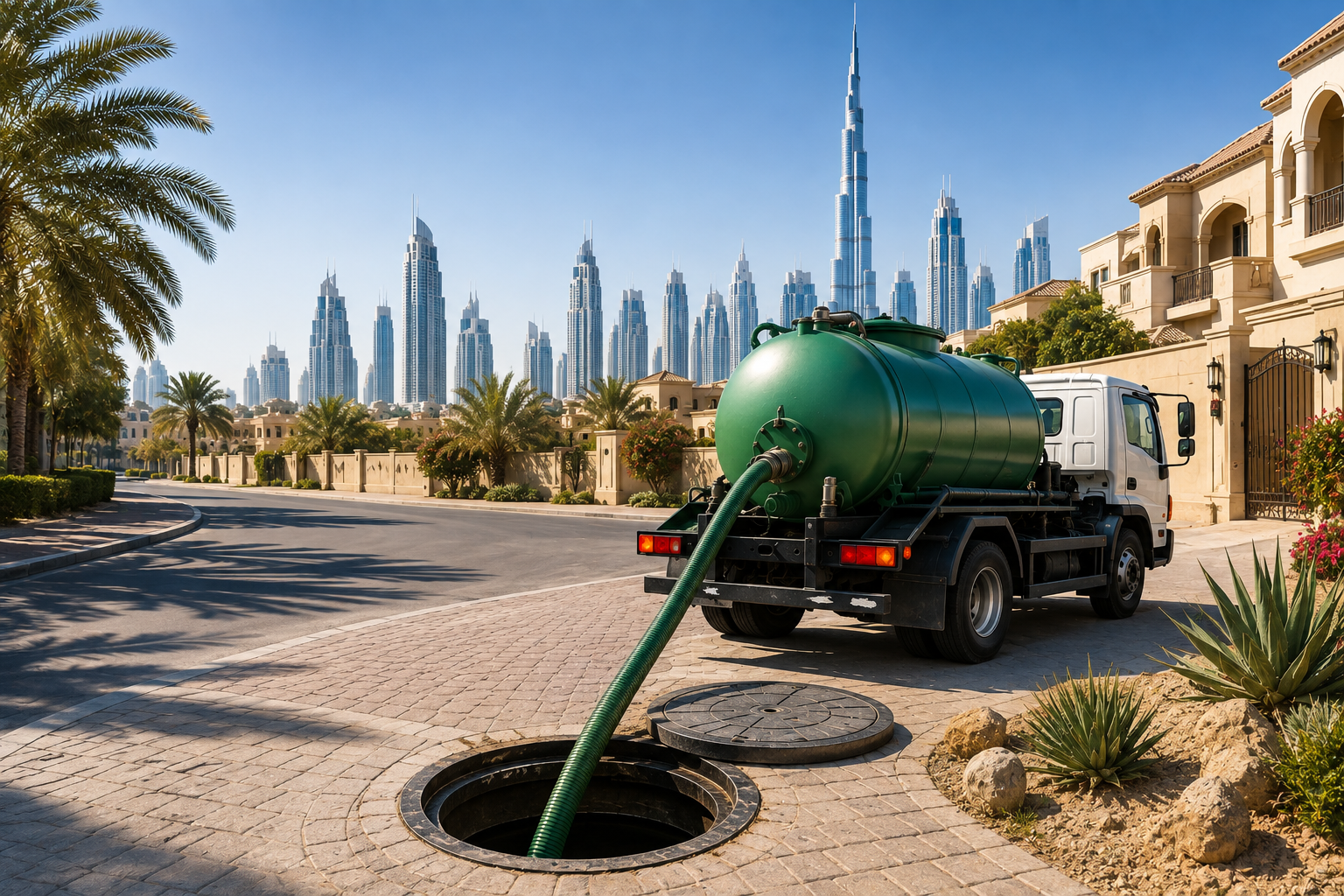
Dubai’s hot climate, high-density residential communities, villas, restaurants, hotels, and commercial properties can place significant demands on wastewater systems. If your property relies on a septic tank, regular pumping and cleaning are essential to prevent sewage overflow, foul odors, blocked drains, and costly wastewater problems.
But how often should you clean a septic tank in Dubai?
There is no single schedule that works for every property. The ideal septic tank cleaning frequency depends on tank size, wastewater usage, number of occupants, property type, and the amount of sludge accumulating inside the tank.
At Triangle Septic Tank Cleaning Services Dubai, we provide professional septic tank cleaning and pumping services in Dubai for villas, residential buildings, restaurants, hotels, commercial properties, and industrial facilities.
This guide explains how Dubai’s climate can affect septic tank maintenance and when you should schedule professional cleaning.
How Does Dubai’s Climate Affect Septic Tanks?
Dubai experiences extremely hot and dry conditions for much of the year. While temperature alone does not determine how frequently a septic tank needs cleaning, the local environment and high water usage in some properties can contribute to wastewater management challenges.
Factors that may affect septic tank maintenance include:
- High temperatures
- Heavy wastewater usage
- Large residential properties
- Commercial kitchen operations
- High occupancy
- Grease and solid waste entering the system
- Sediment and sludge accumulation
- Irregular maintenance
A septic tank should therefore be monitored based on its actual condition and usage rather than relying only on a fixed calendar schedule.
How Often Should a Septic Tank Be Cleaned in Dubai?
For many residential properties, professional septic tank pumping and cleaning every 2–4 years may be a reasonable general maintenance range.
However, some properties may need service more frequently.
For example:
| Property Type | Potential Maintenance Frequency |
|---|---|
| Small villa | Every 2–4 years |
| Large villa | Every 1–3 years |
| Apartment/residential building | Depends on occupancy and tank capacity |
| Restaurant | Potentially more frequent |
| Hotel | Depends on wastewater volume |
| Commercial facility | Based on usage and tank capacity |
| Industrial property | Requires site-specific assessment |
These are general guidelines rather than universal rules. A professional inspection can determine the appropriate cleaning frequency for your particular septic system.
1. Number of People Using the Property
The more people using a septic system, the more wastewater and solid waste it receives.
A small household may produce significantly less wastewater than a large villa with many occupants.
High occupancy can result in faster:
- Sludge accumulation
- Scum buildup
- Tank filling
- Drainage demand
If your household size has increased, it may be worth reassessing your septic tank cleaning schedule in Dubai.
2. Size of Your Septic Tank
Tank capacity is another important factor.
A larger septic tank can generally accommodate more wastewater and solids before requiring pumping, while a smaller tank may reach its maintenance threshold sooner.
If you have recently moved into a property and don’t know the tank size or previous cleaning history, arranging a professional inspection can help establish a maintenance schedule.
3. Your Daily Water Usage
High water consumption can place additional pressure on a septic system.
Activities such as:
- Frequent laundry
- Long showers
- Multiple bathroom uses
- Daily cleaning
- High-volume kitchen usage
can increase the amount of wastewater entering the system.
Reducing unnecessary water usage can help your septic system operate more efficiently.
4. What Goes Into Your Septic System Matters
A septic tank is designed to handle wastewater and sewage-not every type of household or commercial waste.
Avoid flushing or disposing of materials such as:
- Wet wipes
- Sanitary products
- Paper towels
- Cooking oil
- Grease
- Chemicals
- Paint
- Non-biodegradable materials
These materials can contribute to blockages, sludge accumulation, or damage to components connected to the septic system.
For restaurants and commercial kitchens, grease trap cleaning in Dubai is particularly important because fats, oils, and grease should be intercepted before they enter wastewater lines.
5. Restaurants May Need More Frequent Septic Tank Cleaning
Restaurants generate significantly more wastewater and solid waste than many residential properties.
Kitchen operations can introduce:
- Food particles
- Oils
- Fats
- Grease
- Cleaning chemicals
- Wastewater
into the drainage system.
For restaurants, hotels, cafes, and commercial kitchens, septic tank maintenance should be based on actual wastewater volume and sludge levels rather than simply following a residential cleaning schedule.
Regular grease trap cleaning and commercial drain cleaning in Dubai can also reduce the amount of grease entering connected wastewater systems.
Signs Your Septic Tank Needs Cleaning
You should not wait until the tank overflows before arranging professional service.
Watch for these warning signs:
Slow Drains
If sinks, showers, and toilets throughout your property are draining slowly, the septic system may be approaching capacity or experiencing a blockage.
Foul Sewage Odors
Persistent sewage smells around drains, inspection chambers, or the septic tank can indicate a wastewater problem.
Toilet Backups
Repeated toilet backups may indicate that the septic tank or connected sewer lines require professional attention.
Standing Water
Wet or unusually saturated areas around the septic tank or drainage field may indicate a problem with the system.
Sewage Overflow
Visible sewage overflow is an urgent warning sign and requires professional assistance.
Why Regular Septic Tank Cleaning Is Important in Dubai
Routine septic tank maintenance can provide several benefits.
Prevent Sewage Overflow
Removing accumulated sludge helps maintain available tank capacity.
Reduce Foul Odors
Professional cleaning removes accumulated waste that can contribute to unpleasant smells.
Protect Drainage Systems
A well-maintained septic system can reduce the likelihood of backups and related drainage problems.
Reduce Emergency Costs
Preventive maintenance is generally preferable to waiting for an overflowing septic tank or major drainage blockage.
Improve System Performance
Regular pumping and inspection help identify potential issues before they become major problems.
What Happens During Professional Septic Tank Cleaning?
Professional septic tank cleaning typically involves several stages.
Step 1: Inspection
The technician assesses the tank and identifies the access points.
Step 2: Pumping
A vacuum tanker removes accumulated sewage, sludge, and waste from the tank.
Step 3: Cleaning
Remaining material may be removed to help clean the interior of the tank.
Step 4: Inspection
The tank and accessible components can be checked for signs of damage, unusual buildup, or other issues.
Step 5: Proper Waste Disposal
Collected wastewater and sludge should be transported and disposed of through appropriate channels.
The exact process depends on the tank type, condition, accessibility, and property requirements.
Septic Tank Cleaning vs Septic Tank Pumping
These terms are often used interchangeably, but they can refer to slightly different services.
Septic tank pumping primarily focuses on removing the accumulated liquid, sludge, and waste from the tank.
Septic tank cleaning may involve more comprehensive removal of remaining sludge and buildup from the tank.
A professional service provider can recommend the appropriate approach based on the tank’s condition.
How to Extend the Time Between Septic Tank Cleanings
Although every septic system needs periodic maintenance, good usage habits can help reduce unnecessary buildup.
Reduce Water Waste
Avoid excessive water use and repair leaking fixtures promptly.
Keep Non-Biodegradable Waste Out
Only flush materials suitable for septic systems.
Avoid Pouring Grease Down Drains
Cooking oil and grease should be collected and disposed of properly.
Maintain Your Grease Trap
Restaurants and commercial kitchens should schedule regular grease trap cleaning in Dubai.
Schedule Regular Inspections
Don’t wait for a backup before checking the condition of your septic tank.
Professional Septic Tank Cleaning Services in Dubai
Triangle Septic Tank Cleaning Services Dubai provides reliable septic tank and wastewater management solutions for residential, commercial, and industrial properties.
Our services include:
- Septic Tank Cleaning Dubai
- Septic Tank Pumping Dubai
- Sewage Tank Cleaning Dubai
- Sewage Tank Pumping Dubai
- Drain Cleaning Dubai
- Sewer Line Cleaning Dubai
- Hydro Jetting Dubai
- Grease Trap Cleaning Dubai
- Sump Pit Cleaning Dubai
- Manhole Cleaning Dubai
- Emergency Drain Cleaning Dubai
Whether you need routine septic tank maintenance or urgent sewage removal, our team can assess your requirements and provide an appropriate cleaning solution.
Frequently Asked Questions
How often should a septic tank be cleaned in Dubai?
Many residential septic systems may require professional pumping every 2–4 years, but the actual frequency depends on tank size, household size, wastewater volume, and sludge accumulation.
Does Dubai’s hot climate mean septic tanks need more frequent cleaning?
Climate can influence wastewater and environmental conditions, but temperature alone does not determine cleaning frequency. Tank capacity, occupancy, wastewater volume, and sludge accumulation are more important factors.
How do I know when my septic tank is full?
Slow drains, foul odors, toilet backups, standing water, and sewage overflow can indicate that your septic system requires professional inspection or pumping.
Can I use chemical drain cleaners with a septic tank?
It is best to avoid excessive use of harsh chemicals because some products can interfere with the biological processes within a septic system. For recurring blockages, professional drain cleaning in Dubai is a safer approach.
Is septic tank cleaning necessary if everything appears to be working?
Yes. Septic tanks can accumulate sludge even when drains appear to work normally. Preventive pumping and inspection can help avoid unexpected backups and overflow.
Final Thoughts
So, how often should you clean a septic tank in Dubai’s climate?
For many residential systems, a general 2–4 year pumping interval can be a useful starting point, but there is no universal schedule. High-occupancy homes, restaurants, hotels, and commercial properties may require more frequent maintenance.
The best approach is to consider your property’s tank size, wastewater usage, occupancy, previous maintenance history, and sludge levels.
If you’re unsure when your septic tank was last cleaned or you’re noticing slow drains, foul odors, backups, or standing wastewater, contact Triangle Septic Tank Cleaning Services Dubai for professional septic tank cleaning and pumping.
Regular maintenance today can help prevent a much bigger wastewater problem tomorrow.
